How Your AI Remembers
This article contains a paid Amazon link. I may earn a commission if you buy through it. As an Amazon Associate I earn from qualifying purchases.
Ask an AI to pick up a project from last week. What does it actually remember?
Maybe the old conversation. Maybe a short summary or a few saved notes. The answer depends on the app—and on what information reaches the model for this reply. [1][3]
That’s the useful part to understand. Your chat history, the model’s working context and any saved notes each do a different job.
Here’s how they fit together, why details get lost, and what helps a project survive the jump to the next conversation.
Chat history is the archive. Context is the workbench.
A language model generates a reply from the information available to it at that moment. That working material is called its context. It can include your question, instructions, earlier messages, documents and results from tools. The context window is the limited space available for that material and the reply. [1]
I find a workbench useful as an analogy.
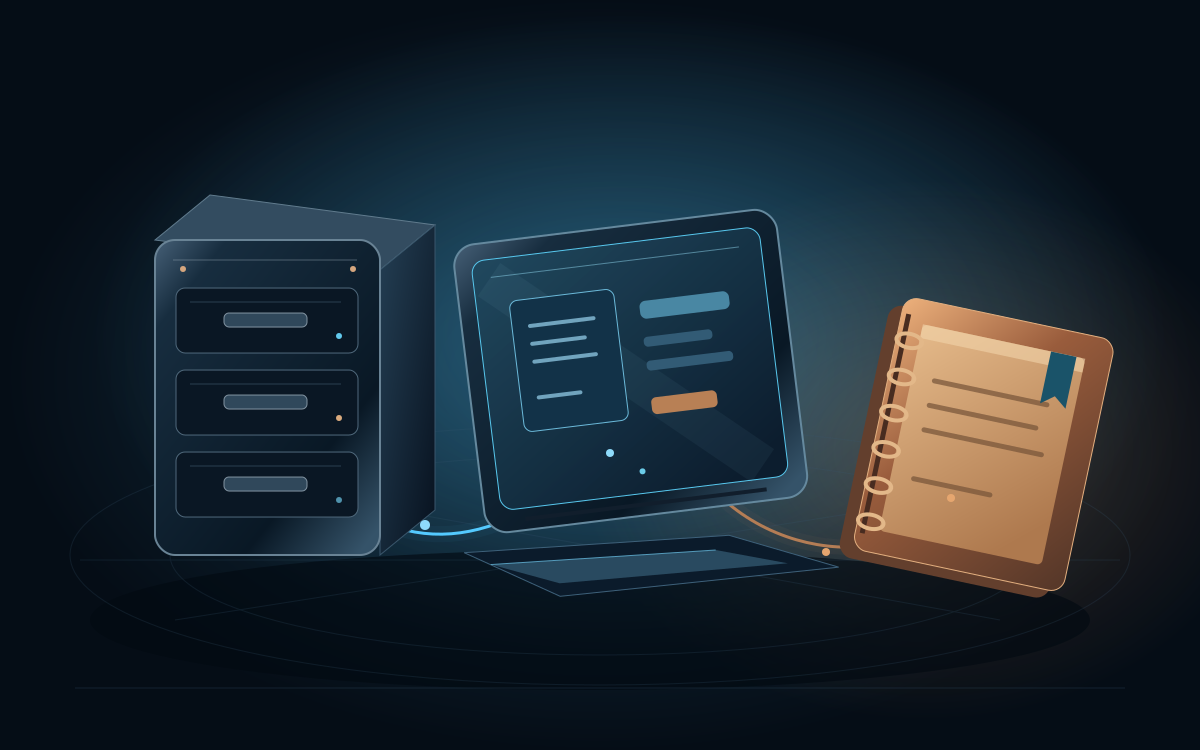
The archive is the filing cabinet: everything the application kept. The context is what gets laid out on the bench for this particular job. A folder can exist in the cabinet without being open on the bench.
That does not mean the model is a tiny person reading papers. It is a way to separate storage from the information used to produce an answer.
An app might send a long stretch of conversation, a shortened version, selected messages, or extra notes. The details depend on the system. You cannot tell exactly what reached the model just by looking at the chat list. [1][3]

Three places information can live. This is a conceptual diagram, not a screenshot of a particular product.
A bigger context window helps. It is not a guarantee.
More room can make it possible to include more of the work. That is useful. But room and reliable use are not the same thing.
The research paper Lost in the Middle tested models on finding and using information in long inputs. In those tests, performance often depended on where the useful information appeared. Material in the middle could be harder for the tested models to use than material near the beginning or end. [2]
That paper appeared in 2024. It is not a scorecard for every model available today, and it does not prove that long context is useless.
The narrower point holds: a large input limit does not, by itself, prove that every important detail will be used correctly.
For a real project, I would rather ask a more practical question: did the next reply respect the budget rule, the rejected approach and the thing we already checked?
What saved AI memory actually adds
One approach is to keep useful notes outside the active conversation and bring relevant parts back when needed. Anthropic describes this pattern in its context-engineering guidance. Its memory-tool documentation gives a concrete example: the model requests file operations, while the application stores and retrieves the files. [1][3]
In that kind of setup, a project note is not a new skill magically baked into the model. It is information the application can supply during later work.
For the website example, a useful note might say:
- No paid tools without approval.
- The contact form already works. Do not replace it without a reason.
- The next task is checking the mobile layout.
- The old pricing suggestion was rejected.
That is much more useful than a note that says, “We talked about a website.”
But writing a good note only handles part of the problem. The system still has to find it, decide that it matters and include it when the next question needs it. Then the model still has to follow it. [1][3]

A practical handoff loop. The checking step matters: a saved note is not proof that the next answer will be right.
Summaries can lose the detail you needed
Long conversations are often shortened so work can continue within the available space. This is called compaction: replacing some earlier material with a more compact account of what matters. [1]
The risk is easy to see. “We considered several plugins” is a summary. “We rejected paid plugins because spending needs approval” preserves the decision.
Both are shorter than the original conversation. Only one tells the next session what not to do.
Anthropic explicitly notes the trade-off: an aggressive summary can lose subtle but important context. [1] I would not treat a smooth-sounding recap as evidence that it kept the right details.
A simple project handoff you can try
You do not need to buy anything to make the next conversation clearer. Start with a short project note containing five things:
- Goal: What are we trying to finish?
- Rules: What must not change, happen or cost money without approval?
- Decisions: What did we choose, and why?
- Evidence: What did we actually check? Keep the source or result nearby.
- Next step: What is the next concrete action?
At the start of a new session, supply that note and ask the assistant to explain the goal, rules and next step back to you. Check that explanation before letting it continue.
This is a suggested workflow, not a benchmarked fix or a guarantee. A mistaken note can carry a mistake forward. An old note can preserve a decision that no longer applies. Private information also needs care: check where an app stores its notes, who can access them and how you can change or remove them.
Keep the note useful, not enormous. A pile of old instructions can become another thing to sort through.
What I would look for in an AI memory feature
The word “memory” on a feature list does not tell me enough.
I want to know what gets saved, how it is brought back, whether I can inspect it, and what happens when it conflicts with a newer instruction. I also want to see the assistant recover when its note is wrong—not just repeat it confidently.
These are part of the questions behind COGG9 Agent. That project is still development work, not a claim that these problems are solved. Context Guard approaches the related problem of scattered chats and project context; it is also private development, not a public installation offered here.
A long chat can be a useful record. For work that lasts, though, the next session needs the right decisions, the reasons behind them and a way to check what is still true.
That is the kind of continuity I care about. Not remembering everything. Carrying the job forward without quietly dropping the part that mattered.
Sources
Anthropic, Effective context engineering for AI agents, September 29, 2025. Context selection, compaction and structured notes; vendor engineering guidance, not an independent guarantee.
Liu and colleagues, Lost in the Middle: How Language Models Use Long Contexts, Transactions of the Association for Computational Linguistics, 2024. Findings apply to the models and retrieval/question-answering tasks studied.
Anthropic, Memory tool documentation. A specific example of application-managed storage and retrieval, not a description of every AI product.