COGG9 research notebook
A home for AI work that remembers.
I kept running into the same problem. A chat would help for an hour, then the work would scatter: one decision in a transcript, one note in a folder, one half-finished test in another place. The machine was useful in the moment, but the project still had no body.
COGG9 is where I’m documenting the attempt to fix that. COGG9 Agent is the harness around the work. COGG9 is the model/core direction. WaveCodecLLM is the signal lane. BHVC is the storage-compression research lane.
It is early, messy in places, and still changing. That is why I’m showing it while it forms.
Four main lanes, with new research questions opening beside them.
COGG9 is the public layer around the AI research and development I’m doing. Not a finished platform. Not a pitch deck. It is a working notebook with the labels left on.
The work is split because each piece needs its own lane. COGG9 Agent deals with memory, tools, recovery, and project state. COGG9 asks what kind of model/core could grow inside that environment. WaveCodecLLM asks how meaning might move through the system without wasting so much compute. BHVC asks whether model weights can store reusable structure once instead of paying the full storage cost again for every tensor.
COGG9 Node Multiplexing is a governed project inside the model/core lane. HASHNODE-256 is a separate new project asking whether useful learned intelligence could eventually be designed around the native SHA-256 search of Bitcoin-mining ASICs. The pieces are separate now. They may fit together later. I want the record to show how they got there, including the dead ends.
A body, a growing core, a signal lane, and a storage question.
That is the plain version. Each project card below opens a deeper page. I want the homepage to be the front door, not the whole explanation crammed into one scroll.

COGG9 Agent
The harness around long AI work.
COGG9 Agent is the self-hosted AI workspace I’m building for long-running work: project-owned memory, visible initiative, governed tools, reviewable outputs, and recovery when things break.
The model can change. The project, the work, and the relationship should not have to disappear.
- AI Harness
- Project Memory
- Tool Use
- Recovery

COGG9
The model/core I’m trying to design for that body.
COGG9, formerly PlasticNodeLM, is the experimental model/core direction I’m building around growth, structure, continuity, memory-aware design, and local hardware.
COGG9 Agent is the environment and harness. COGG9 is the separate model/core direction; this rename does not create an integration decision.
- AI Model
- Model Growth
- Continuity
- Local Hardware
HASHNODE-256
Building AI backwards from SHA-256 silicon.
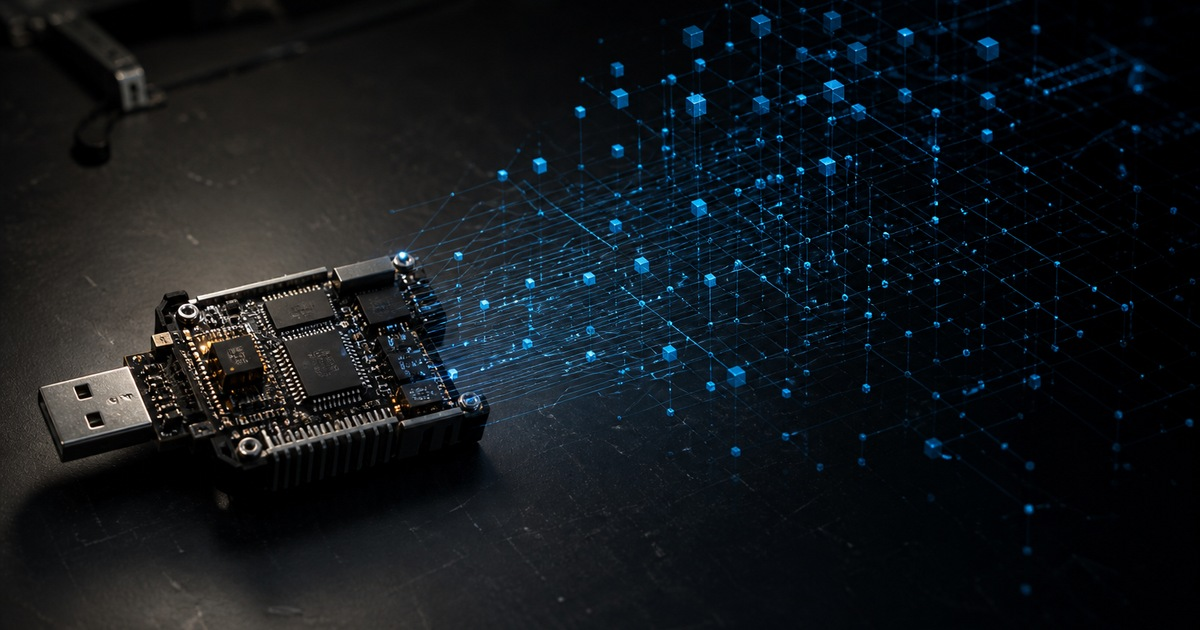
Can an AI architecture be built for the miner instead of forcing a conventional model onto fixed-function hardware? The physical NewPac search boundary is verified. The first learning experiment has not happened yet.
256-bit states. Massive native search. Evidence before intelligence claims.
- SHA-256 ASICs
- 256-bit States
- NewPac Verified
- 0B Next
COGG9 Node Multiplexing
One physical node. Many logical possibilities.
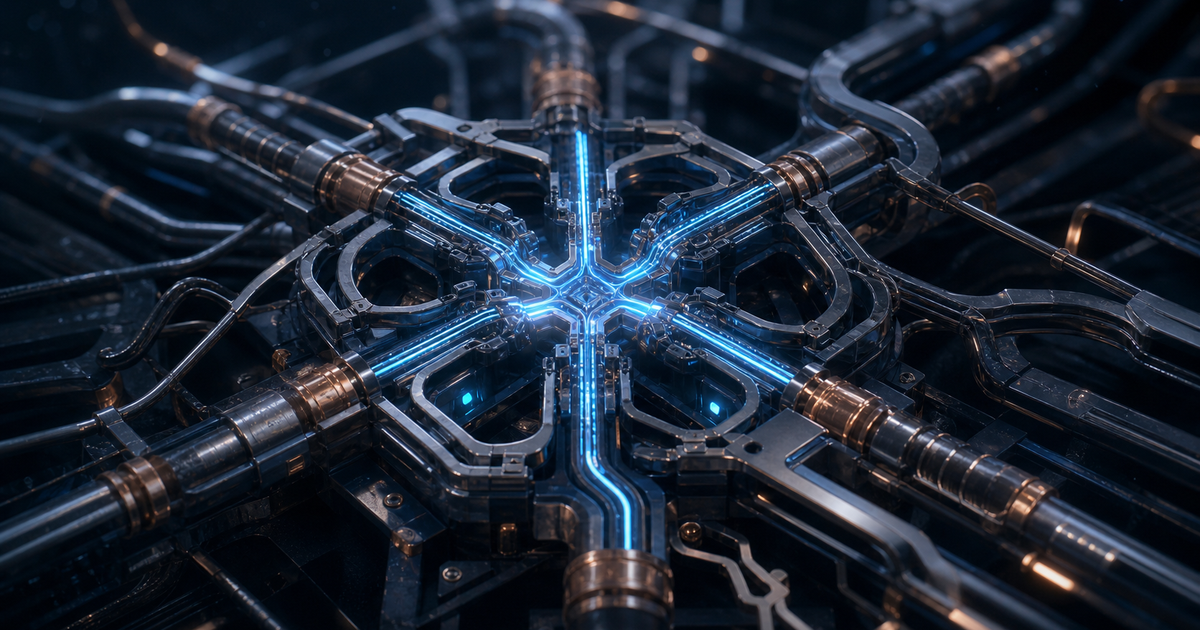
Can shared physical neural capacity support multiple useful logical nodes? This project explores specialized internal programs, private states, concurrent streams, and developmental headroom.
The early evidence is controlled and synthetic. The larger mechanism remains unproven—that is what the next experiments are for.
- Logical Nodes
- Shared Capacity
- Private State
- Governed Testing

The signal lane: less waste inside the machine.
WaveCodecLLM is my compression and machine-meaning research. Human words matter at the edge, where people guide and review the work. Inside the machine, I’m asking whether meaning can travel in a tighter form without disappearing into a black box.
The goal is not “make it smaller” for its own sake. The goal is to keep what matters and stop dragging the whole closet through every internal step.
- Compression
- Machine Meaning
- Signal Paths
- Diagnostics

Blackhole Vector Compression
Can model weights share one compact structure?
BHVC is active compression research for AI weights. The current target is to approach Q8-class storage while reconstructing exact BF16 or FP16 weights and keeping behavior near the FP32 reference.
The early evidence is synthetic, measured, and honest: shared-state reuse crossed over against scalar int16 across multiple batches. Real-model tests come next.
- Shared State
- Exact 16-bit
- Byte Accounting
- Negative Results
The same question keeps showing up: can AI work keep its shape over time?
Memory, model structure, signal paths, and local hardware pressure all pull on the same problem. If the system cannot remember, organize itself, communicate efficiently, and run close enough to inspect, it is not the kind of machine I’m trying to build.
A place for the work
Project context, tool use, memory, and recovery should not vanish every time a chat ends.
Open COGG9 Agent → ModelA core that can change
COGG9 asks whether a model can develop useful structure over time instead of staying frozen.
Open COGG9 → SHA-256 searchBuild for the miner
HASHNODE-256 asks whether 256-bit learned states can eventually make native ASIC search useful.
Open HASHNODE-256 → Logical nodesMore roles inside one structure
Node Multiplexing tests whether shared physical neural capacity can express several useful logical identities.
Open Node Multiplexing → SignalsLess waste inside
WaveCodecLLM asks whether machines can carry meaning more efficiently while people still get inspectable results.
Open WaveCodecLLM → StorageShared structure
BHVC tests whether exact 16-bit weight representations can reuse shared compression structure.
Open BHVC → HardwareNormal machines matter
The work keeps pressure from local hardware in view. If it only works in fantasy compute, it is not grounded enough.
Open system notes →The work is happening on a real local machine, not magic cloud compute.
The current COGG9 test box is an Ubuntu workstation with a Ryzen 9 CPU, 64 GB system memory, and two Intel Arc Pro B70 GPUs with about 30 GB of VRAM each. It is the machine I use to keep local hardware pressure in view.
I want the work to stay close enough to inspect.
Normal hardware creates pressure. Memory, compute, recovery, and tool use all look different when you cannot pretend the machine is infinite.
- Own the data and workflow
- Keep local hardware pressure visible
- Use tools with review points
- Show the research without exposing the blueprint
Follow the build while it is still forming.
The Patreon is for people who want the research notes, build notes, dead ends, and plain-English updates as the work matures. No finished platform pitch. Just careful work, shown honestly.
COGG9 is still being built in public.
For research questions, archive notes, or contact about the work: Edward Greenwood, cogg9research@gmail.com.